Arrival on the Shiant Isles
 |
| The welcoming sign on the bothy door. |
I
arrived on the Shiant Isles on 5th June, after a long journey up
from Cambridge via Flamborough Head, Inverness, Ullapool and Stornoway. Early
that morning we did a last-minute shop for fresh food and loaded our provisions
onto the boat; six big plastic boxes full of camping gear, tagging technology
and office supplies, three large barrels of food, four big water tanks, two
rucksacks loaded with rope access equipment, a portable generator and large
quantities of personal gear, all tightly dry-bagged.
As
we sped across the Minch the excitement levels were rising as we were finally
getting out to the real fieldwork. The chance to spend some time on the Shiants
was one of the main reasons I went for this job. Flocks of seabirds sat on the
water and watched us pass, while porpoise and a minke whale surfaced close by.
It was a calm day but dominated by mist and drizzle that had steadily increased
to a persistent rain by the time the Shiants loomed out of the grey; the tall,
imposing, sheer cliffs surrounded by puffins, razorbills and guillemots filling
the sea and the sky.
 |
| My first view of the Shiants. |
It
was a wet arrival (partly the rain, partly ending up thigh-deep in the sea while loading and unloading) but before long we were drinking tea in the bothy with the
LIFE monitoring team and by early afternoon the sun was
out, giving us time to set up our tents before the storms of that evening drew
in.
 |
| What would become a familiar sight; thermals on the washing line. |
The Islands
The
Shiants are owned by the Nicholson family and a passionate biography of the islands can be found in Adam's book. They are located roughly half way between
Stornoway and the Isle of Skye, in the middle of the turbulent Minch. They
consist of three main islands and an assortment of smaller outcrops and rocks.
We have been working on Eilean an Tighe (House Island) and the larger, steeper
Garbh Eilean (Rough Island), joined at all but the highest tide by a narrow
shingle isthmus, crossing of which can dictate time spent in the field.
 |
| Looking south across House Island; the smaller, lower and boggier of the two main islands. On the near right side you can just make out the bothy. |
 |
| Looking north to Rough Island across the isthmus, boulder field and arch. |
 |
| The imposing Rough Island. The zigzag route up this steep edge takes you from sea level to 135m without much mercy. Down on the causeway the LIFE team are returning late to find a challenging dash across between the waves. |
Our
base is beside the bothy on Eilean an Tighe. A small but comfortable, dry
building with a lovely open fire and nearby water source, we were extremely
grateful for its presence in the poor weather that dominated our stay.
 |
| The bothy. Due for a re-roof, it did keep us dry and warm. |
 |
| Sitting round the table for food, drink, warmth and conversation in the evening. |
 |
| The west-facing bothy catching a superb sunset. Our tents are off on the right and the small spring where we got our fresh water is just behind me. |
Around
the camp are nesting oystercatchers, pied wagtails and meadow pipits while a
small crèche of eider ducks was regularly seen around the isthmus.
 |
| Female eider ducks and ducklings. |
Further up
the slope, defending their nests with the aggression one would expect, are the bonxies, the great skuas, often competing with the large gulls and ravens for territorial
dominance.
 |
| Bonxie calling out a warning. |
 |
| You get too close to the nest you're going to know about it. |
The cliffs are teeming with kittiwakes and auks, fulmars cackle
loudly from patches among them and puffins cover the grassy slopes like
discarded confetti.
 |
| Slopes full of puffins. |
 |
| More obligatory puffin photos. |
 |
| Carrying fresh nesting material. With such a wet summer this was a common sight, as were filthy, muddy birds. |
The
mixture of upland, marshland and coastal plants and flowers means there is
quite a diversity of colour amongst the well-grazed grasses, with bright yellow
irises and pink/purple orchids the showpieces.
 |
| Common spotted orchid, I believe. |
 |
| Flag iris. |
A
highlight for me has been regular sightings of eagles; a pair of golden eagles can
regularly seen circling the nearest peak of Garbh Eilean, while the mighty
white tailed eagles dominate the other side.
 |
| A poor photo of a rather tatty golden eagle. Still, you can see that amazing eagle face. |
The
real star of the Shiants though is the boulder field, Carnach Mhor, surely one
of the most amazing places in the world for sheer density of seabirds.
 |
| Looking down at the boulder field. I'm sure it was never this sunny. |
It really
is like a crowded city as every square meter is packed with birds, eggs,
chicks, noise and smell. In little pockets on flat rocks the guillemots huddle
together. Down in the cracks and gaps the razorbills make their home while
further down still, in the smaller crevices, puffins peer out at you in their
inimitable way. Every so often a loud honking reverberates around the enclosed
rocks as a shag makes its presence felt.
 |
| Shag on the nest among the boulders. |
The
sky above is filled with thousands of birds wheeling around, wings beating rapidly
as they circle their landing sites. At times, such as when a predator flies
over or when large numbers are returning with food at dusk, the sky looks so
full it feels like a biblical swarm.
 |
| Looking upwards from within the boulder field, there's lookouts on every rock and more coming in all the time. |
STAR work
See
my previous blog for the background to the work I was doing on the Shiants. We
were focussing on gathering track data from the larger auks; razorbills and
guillemots.
 |
| Razorbill. |
 |
| Guillemot. |
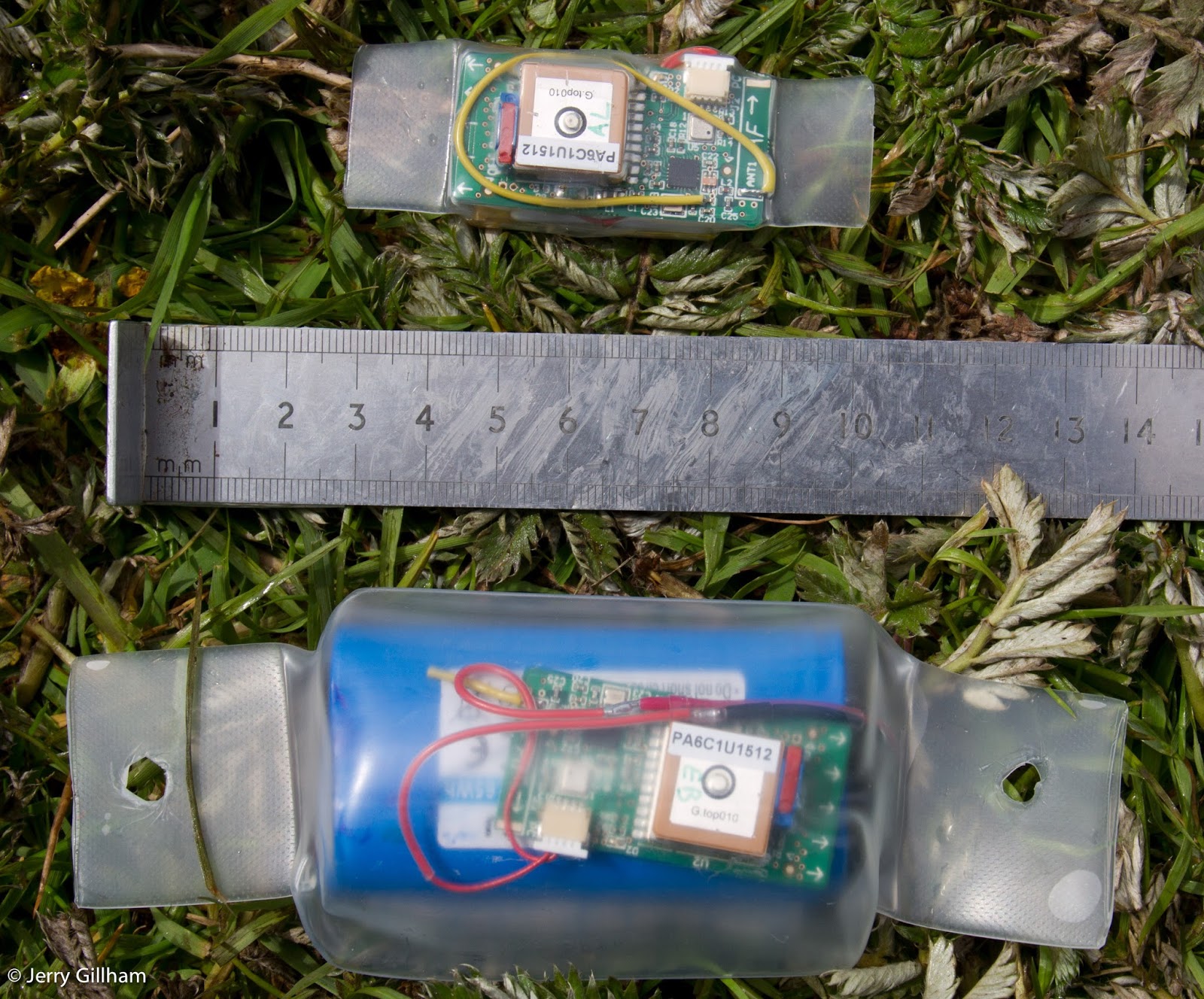
After a few initial teething problems with the devices we are very
happy with the data we got back. The tracks are to be properly analysed and
published but I’ll try and get an example of the sort of thing we found.
 |
| Working late into the evening sealing tags in their waterproof cases. |
Additional work
It’s
been a busy time on the normally isolated islands as work gears up towards the
rat eradication project. The Shiants have been identified as one of the most
important sites for seabirds and for seabird potential should the black rats,
accidentally introduced years ago through shipwrecks, be removed. This is a
large scale project that will commence over winter, though we had a few traps
around our camp to keep our food and bedding safe and rodent-free.
 |
| The warning sign within the bothy. |
 |
| A poor, unfortunate, extremely cute eco-terrorist who came too close to our food. That long tail they have is amazing. |
One of the key hopes is that the removal of rats will see the return of Manx shearwaters and storm petrels; vulnerable burrow-nesting species who have increased in numbers on other islands (such as Ramsey) where rodents have been eradicated. Happily on our journey back to the mainland I spotted a couple of shearwaters cutting the waves of the Minch, so they are around.
 |
| Fulmar. |
Along
with the RSPB’s LIFE team, who are attempting to record all the vegetation,
vertebrate and invertebrate life present on the island, we have been joined at
times by a small film crew documenting human-seabird interactions and by
Scottish Natural Heritage, carrying out additional monitoring. In particular
they have been counting the huge numbers of seabirds, something we got involved
with, marking out areas of known active burrows on the puffin slopes then
retiring and counting the hundreds of individuals standing out beside them.
Reflections
The
above is a lightly edited version of a blog I wrote for the RSPB’s own website
(hence the confused tenses) but with better photos. We left the Shiants on 28th
June, heading off through rough seas on a nice big boat after helping the large
ringing group unload their huge amounts of kit onto the shore.
Though
we had reduced the size and weight of our kit, mainly by eating the food but
also by losing a few things, I had an extra two bin bags full of plastic
bottles, all collected from a short stretch of beach near the bothy. Maybe it’s
because I’ve spent the last few years somewhere truly remote where I collected
and recorded any debris found, but I was shocked by the amount of rubbish along
the shore. Mostly marine debris and fishing gear – buoys, ropes, nets and
crates – but so many bottles, lumps of polystyrene and assorted broken
plastics. These are a huge problem, not just aesthetically but in terms of
being ingested by marine life. It was so depressing to see a remote, isolated,
beautiful, wild island so obviously polluted by sheer human laziness.
 |
| I just didn't have enough time to build a huge sculpture / wicker man out of it all. |
I
was sad to leave the islands but looking forward to comforts like a comfy bed, shower
(rather than the cold sea) and a toilet (rather than a wave-bashed rock). Time
there had been tougher than I imagined, largely the result of a) continual
damp, especially boots, and b) a constantly whistling companion. Still, when it
was good it was magnificent. I’ve fond memories of sitting round the fire in
the bothy in the evenings, chatting with the others who generously shared their
wine, whisky and food.
 |
| Razorbill preparing to depart. |
The
afternoons when the sun was out brought out the blue of the sky and sea, the
green of the hills and the yellow lichen on the rocks. When it was clear enough
you could see all along the Outer Hebrides and down to Skye. Having time to
observe the seabirds in such huge numbers, behaving naturally, oblivious to my
presence was always a joy and long may it continue to be.
 |
| A glorious sunset over the western isles. |
Jerry